When the Mind Fractures
The Lindsay Clancy Case, the Haunting Shadow of Constance Fisher, and the Agonizing Law of Postpartum Filicide
Special Investigative Feature
Fact-Checked Legal & Clinical Analysis
Published: Late 2026 Edition
Est. Reading Time: 12 Minutes

The question that paralyzed the jury room in Plymouth Superior Court throughout seven grueling days of deliberation in late summer 2026 was not who ended the lives of Cora, Dawson, and Callan. Lindsay Clancy admitted to the acts. Rather, the battle was over the boundaries of human culpability: Was Clancy a cold, deliberate killer whose homicidal calculations were masked by depression, or a psychotic puppet whose neurochemistry had fractured under the weight of catastrophic postpartum illness?
Table of Contents
The Anatomy of a Collapse: Lindsay Clancy
Born Lindsay Marie Musgrove in 1990, she had dedicated her adult life to childbirth and infant care as a maternity nurse at Mass General. Married to Patrick Clancy in 2016, the couple appeared to friends and neighbors as the archetype of suburban bliss. But following the birth of her third child, Callan, in May 2022, her psychological state underwent an escalating, documented unraveling.
Between September 2022 and January 2023, Clancy repeatedly sought psychiatric help for debilitating anxiety, insomnia, and intrusive thoughts. She voluntarily admitted herself to McLean Hospital on January 1, 2023, where she was diagnosed with severe major depressive disorder without psychotic features and discharged four days later. However, phone records introduced by prosecutors showed internet queries regarding "postpartum psychosis," "hallucinations," and carotid anatomy—evidence that the Commonwealth contended proved cold premeditation, while defense experts argued reflected a terrified mother desperately searching her own slipping sanity.

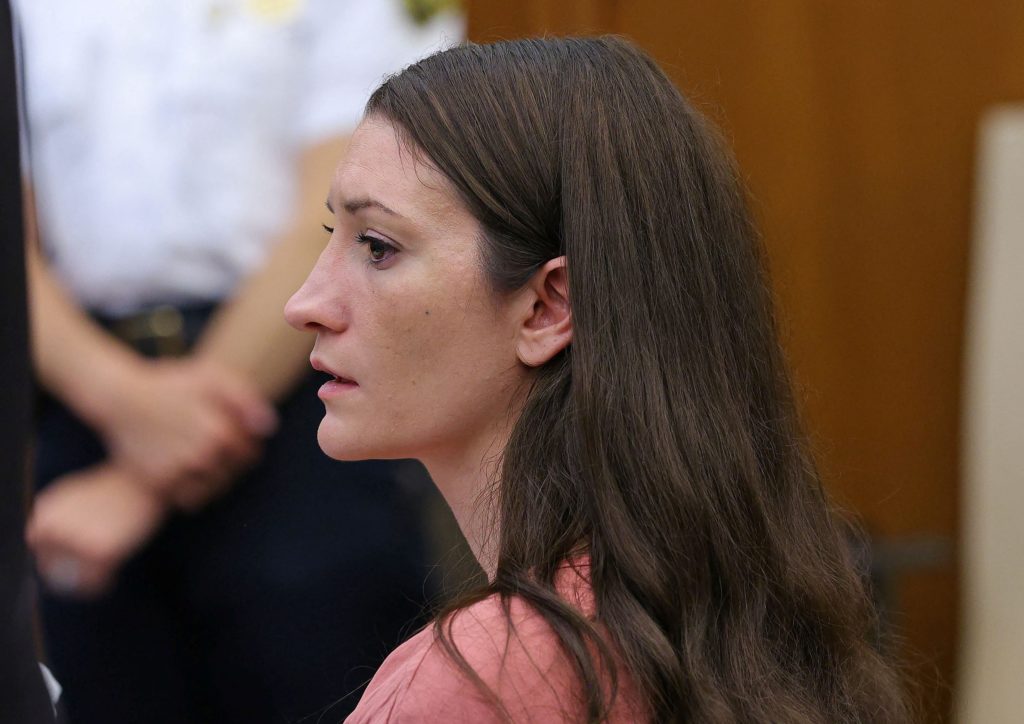
On January 24, 2023, she built a snowman with her children, spoke normally with her husband, and then asked him to pick up takeout dinner in Plymouth and stool softener for their daughter. In the 45-minute window while he was gone, she took each child into the basement and strangled them with exercise bands before slashing her neck and wrists and jumping from the master bedroom window.
The Trial, Dr. Resnick, and the 11–1 Hung Jury
When the murder trial commenced in July 2026 before Judge William F. Sullivan, defense attorney Kevin J. Reddington presented a defense anchored in clinical pathology: Clancy was experiencing postpartum psychosis combined with bipolar decompensation, compounded by an involuntary intoxication cocktail of 13 psychiatric drugs. Nationally renowned forensic psychiatrist Dr. Phillip Resnick testified that Clancy was acting under the command hallucination of a disembodied male voice ordering her to kill the children and herself.
Assistant District Attorneys Jennifer Sprague and Shanan Buckingham mounted an aggressive counter-narrative: Clancy mapped out Patrick's driving route, checked restaurant schedules, and sent him away to create an unobstructed window of execution. They stressed that none of the medical staff who evaluated her in the preceding 72 hours observed overt psychosis, asserting her remorse was secondary and self-serving.
The September 4, 2026 Mistrial Declaration
After nearly 40 hours of deliberation across seven contentious days, the foreperson informed the court that the jury was hopelessly deadlocked. Post-trial interviews revealed that 11 of the 12 jurors voted to find Lindsay Clancy Not Guilty by Reason of Lack of Criminal Responsibility. A single male juror refused to acquit on insanity grounds, precipitating a mistrial. Clancy was remanded to Tewksbury State Psychiatric Hospital pending the Commonwealth's retrial determinations.
The Haunting Precedent: Constance Fisher (1954 & 1966)
Throughout the Clancy proceedings, one historical case was repeatedly invoked in legal journals and court hallways: that of Constance Margaret Fisher of Waterville and Fairfield, Maine. Fisher remains the American judicial system's most terrifying case study in psychotic maternal recidivism.

Constance Margaret Sirois Fisher
First Tragedy (Waterville, ME — March 8, 1954): Fisher drowned her three children—Richard (6), Daniel (4), and Deborah (8 months)—in the bathtub, leaving a note stating God ordered her to drown them to save them from worldly wickedness. Found unconscious from a chemical overdose, she was declared legally insane and committed to Augusta State Hospital.
The Deinstitutionalization Release (1959): Diagnosed with paranoid schizophrenia and postpartum depression, she was discharged after four years following husband Carl Fisher's persistent petitions and the mid-century psychiatric push toward community reintegration.
The Second Tragedy (Fairfield, ME — June 30, 1966): After having three more children—Kathleen (6), Michael (4), and Natalie (9 months)—Constance relapsed and drowned all three in the exact same manner. The court committed her for life to Augusta State Hospital. In October 1973, she escaped the facility and was found drowned in the Kennebec River.
The Fisher precedent is the specter that haunts every insanity defense involving filicide. While psychiatric advocates emphasize that modern antipsychotics, mood stabilizers, and outpatient monitoring make 1950s-era relapses exceedingly preventable, Fisher’s dual tragedies serve as the ultimate cautionary exhibit for prosecutors who argue that institutional release carries existential risks.
The Doctrine of Criminal Responsibility: M'Naghten vs. McHoul
Understanding why the Clancy trial deadlocked requires untangling the distinctive architecture of Massachusetts insanity jurisprudence:
The M'Naghten Rule (1843)
Derived from the British trial of Daniel M'Naghten, this strict cognitive test requires that the defendant was suffering from a defect of reason such that they did not know the nature and quality of the act, or did not know what they were doing was wrong. Under strict M'Naghten jurisdictions (like Texas in the original Andrea Yates trial), even an acutely psychotic mother who understands that society views killing as illegal can be convicted of murder.
Commonwealth v. McHoul (1977)
Massachusetts adopted the American Law Institute (ALI) Model Penal Code test: A person is not criminally responsible if, as a result of mental disease or defect, she lacks substantial capacity either to appreciate the criminality/wrongfulness of her conduct OR to conform her conduct to the requirements of the law (volitional prong).
The Judicial Divide: Psychotic Decompensation vs. Malice & Deceit
In true-crime discourse, cases where mothers kill children are often lumped into a single headline. In forensic psychiatry and law, however, they represent diametrically opposed poles. The seminal research of Dr. Phillip Resnick separates maternal filicide into distinct psychological categories:
Directly Related Precedents: Psychosis, Command Delusions & Altruism

Andrea Pia Yates (Houston, TX — 2001)
NGRI Retrial 2006The Act: Drowned all five of her children (ages 6 months to 7 years) in the bathtub while suffering severe postpartum depression with psychotic features.
Psychiatric Core: Yates believed Satan was residing inside her and that her children were doomed to eternal damnation unless she killed them before they reached the age of accountability. In 2006, her conviction was overturned due to false psychiatric testimony, and she was found Not Guilty by Reason of Insanity. She remains at Kerrville State Hospital.
Deanna Laney (Tyler, TX — 2003)
NGRI Acquittal 2004The Act: Stoned two of her sons (ages 8 and 6) to death and severely injured her 14-month-old infant in rural Texas.
Psychiatric Core: Church-going mother with no history of abuse. Suffered profound auditory hallucinations; believed God was warning her that the apocalypse was near and commanded her to smash her sons' heads with stones. Both prosecution and defense psychiatrists concurred she could not distinguish moral right from wrong at the time. Found NGRI in 2004.
Distinguishable / Non-Related Precedents: Malice, Romances & Cover-Ups

Susan Smith (SC, 1994)
Life SentenceDrowned her sons Michael (3) and Alex (14 mo) in John D. Long Lake because her wealthy lover broke off their affair due to having children. Orchestrated a fabricated 9-day racial carjacking hoax on national TV. Key distinction: Motivated entirely by romantic convenience; zero psychosis or delusional disconnection.

Diane Downs (OR, 1983)
Life + 50 YearsShot her three young children point-blank inside her car and concocted a "bushy-haired stranger" carjacking narrative to eliminate them for a lover who wanted a child-free existence. Evaluated as having antisocial personality disorder, but fully legally sane and calculating.

Lori Vallow Daybell (ID, 2019)
Multiple Life TermsConspired to murder JJ Vallow and Tylee Ryan. While expressing cult-like "zombie" ideologies, the murders were coordinated alongside life insurance theft, Social Security fraud, and flight to Hawaii. Sane under the law and convicted of premeditated murder.

Casey Anthony (FL, 2008)
Acquitted of MurderFailed to report 2-year-old Caylee missing for 31 days while partying and fabricating a fictitious babysitter. Postpartum mental illness was never present or argued; the defense alleged an accidental drowning followed by panic and evasion.
The Forensic Filicide Matrix
Filter across cases based on Resnick's clinical taxonomy to evaluate mental state, legal defense, and ultimate judicial determination.
| Defendant & Year | Clinical State | Resnick Category | Primary Defense | Judicial Outcome |
|---|---|---|---|---|
| Lindsay Clancy (2023/2026) | Postpartum psychosis, bipolar disorder, drug toxicity | Acutely Psychotic | Lack of Criminal Responsibility (McHoul standard) | Mistrial (11–1 hung jury for insanity) |
| Andrea Yates (2001/2006) | Postpartum psychosis with Satanic delusions | Altruistic (Delusional) | Legal Insanity (M'Naghten cognitive test) | NGRI Acquittal (Kerrville State Hospital) |
| Constance Fisher (1954/1966) | Paranoid schizophrenia, postpartum depression | Altruistic / Psychotic | Not Guilty by Reason of Insanity | Lifetime Commitment to Augusta State Hospital |
| Susan Smith (1994) | Borderline / dependent personality, depression (Sane) | Spousal / Romantic Rejection | Diminished mental state / mitigating distress | Convicted of Murder (Life Imprisonment) |
| Diane Downs (1983) | Antisocial & narcissistic personality disorder (Sane) | Romantic Elimination | Third-party intruder defense | Convicted of Murder (Life + 50 Years) |
| Lori Vallow Daybell (2019) | Extreme apocalyptic religious belief & fraud (Sane) | Ideological & Financial | Competency challenges; religious defense | Convicted of 1st-Degree Murder (Life without parole) |
| Casey Anthony (2008) | Histrionic / avoidance traits (No clinical psychosis) | Unwanted Child / Neglect | Accidental drowning and panic cover-up | Acquitted of Murder Charges |
The Systemic Reckoning & The Civil Lawsuits
Beyond the criminal courtroom, the Clancy tragedy has initiated an unprecedented civil and institutional reckoning. In early 2026, medical malpractice lawsuits were initiated against treating psychiatrist Dr. Jennifer Tufts, psychiatric nurse practitioner Rebecca Jollotta, and medical institutions including McLean Hospital and Women & Infants Hospital.
The case has also sparked legislative mobilization across Massachusetts and neighboring states, reigniting calls for the adoption of statutory frameworks resembling the British Infanticide Act—which legally recognizes the severe neurobiological disruptions caused by postpartum lactation and hormonal shifts, directing affected mothers toward mandatory clinical treatment rather than life in correctional isolation.
Conclusion: The Unresolved Threshold
Whether the Commonwealth of Massachusetts elects to retry Lindsay Clancy or reach a supervised civil commitment agreement, the case remains an indelible tragedy. It stands alongside Constance Fisher and Andrea Yates as a terrifying reminder of what happens when the human mind breaks under the weight of severe postpartum illness—and the profound challenge our legal system faces in determining where medical tragedy ends and criminal guilt begins.